Antibiotic
free farming is not difficult
John
Carr
Farming without antibiotic medications is not
difficult, but does take a steely determination by the whole health team to
want to make it happen.
Before, embarking on an antibiotic free farm
regime, a health team needs to be constructed.
This needs to involve the owners, manager, stockpeople and the
veterinarian. But it also needs the
understanding of the genetic and nutrition suppliers. A degree of openness is required which is
alien to many farms that are more used to a degree of silence about actual farm
events. This takes trust and
honesty. Each member of the farm health
team has specific roles; the veterinarian plays the vital role of the “pig”
speaking up for the animal’s biology and is the “honest broker” with robust
checking systems.
Antibiotic free farming must not be at the
expense of pig welfare and well-being.
Antibiotic free farming is about getting the
management right:
·
Management of
the environment
·
Management of
any compromised pigs
Management
of pathogens
It is hard enough to develop control programmes
for the existing farm pathogens and opportunists as well as having to contend
with new pathogens being introduced into the farm. The farm health team needs to develop active biosecurity
protocols against all the natural routes of threat to the
farm

Lack of discipline and carelessness are the
major threats to a pig unit. This is
largely associated with greed or a panic response to “improve”. If the farm has good health, do not throw it away
on a pipe dream of a “better” greener pig on the other side of the fence.
The key component of biosecurity is to control
pigs, in all their forms, entering the farm while at the same time allowing for
genetic improvement. Farmers place
enormous faith in genetic supplier’s health programmes and yet this is not at
the top of many genetic suppliers’ daily concerns.
Pathogens enter farms through:
- Location
– airborne pig pathogens
- Live
animals – gilts, boars and semen
- Faeces
from live animals –on trucks: dead animal, slaughter,
animal, feed and general vehicles
- Other
vectors: boots, clothing and soiled equipment – pig faeces
Farms break with new pathogens or new variants
of current pathogens – for example Porcine Reproductive and Respiratory
Syndrome virus. Location, location,
location is the key. If there is a farm
with frequent health problems and purchasing live pigs from markets, there is
little chance that any neighboroughing farm within 1 km will be able to
maintain an antibiotic free status and still meet the welfare requirements of
their pigs. Antibiotic free may be
achieved on a regional basis, but with farms under different ownerships,
tensions and greed arise which can break the system. The veterinarian has a role here as honest
broker, but this role needs to be carefully explored, possibly legally, before
the venture even starts.
Minimum requirements for an antibiotic free
system
Location –
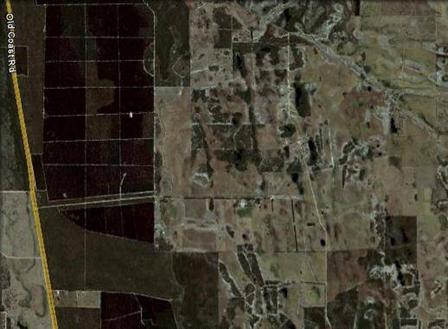
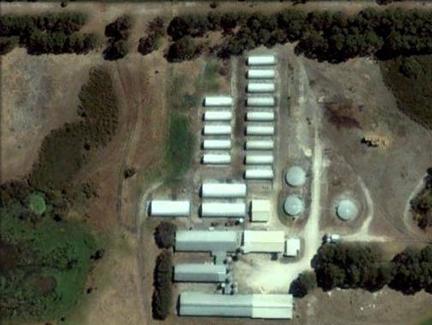
The farm should be 1 km away from adjacent pig farms.
An isolation/acclimatisation area is essential,
which then runs as a strict all-in/all-out programme – which therefore, may
require multiple isolation areas. Each
isolation area needs to be at least 50 metres from the main farm and obviously
each more than 1 km from adjacent farms.
The prevailing wind should be from the main farm towards the isolation
areas. This can prove impossible in many
parts.
|
Overall
biosecurity – no pig farms within 1km of farm or isolation
area. No major road within close
proximity |
|||||||
|
Prevailing wing
Green-Farm Black- Isolation (ideally there should be 2 or 3 areas to
allow 6 weeks isolation) |
|
Edge of the One kilometer zone from main farm Edge of the One kilometer zone from isolation
area(s) No farm within zones |
|||||
|
Whole
farm biosecurity – location of dead stock area,
isolation, manager accommodation, slurry systems |
|||||||
|
Compost
|
|
Farm
gate Manager house Isolation area 1 Isolation area 2 |
|||||
|
On-farm
biosecurity – location of risk areas: internal roads, feed
bins, loading areas |
|||||||
|
On
– farm Highlighted in green
Perimeter |
|
Off-farm Perimeter Straw compost Feed bins Farm entrance High risk area Loading area Feed bins Car park |
|||||
|
Note the farm entrance is both on and off farm
as the shower is the dividing line Note the high risk area used by “off-farm”
vehicles is highlighted |
|||||||










Good lines of communication between the genetic
supplier’s veterinarian and the farm veterinarian. The genetic company should prepare a health
declaration and be willing to prioritise the antibiotic free farm with regard
to health information. Consistent and
quality gilt supply is an essential component to pig flow.
Dead animal
disposal has to be away from the farm or utilise
burial, incineration or, ideally, composting.
This depends on local legal constraints.
Truck hygiene has
to be well understood, especially trucks which take animals to the
slaughterhouse. In an ideal world, feed
and animal movements should be on a Monday after the trucks are not used over
the weekend. But the farm has to realise
they live in the real world. But they
can still expect clean vehicles. In
PRRSv negative farms, trucks can be heat treated prior to use.
Vermin control has
to be pro-active. Buildings should be
bird proofed where ever possible. Flies
and mosquitoes should be controlled and buildings even fly proofed with a 2mm
screen. Note that screens will need to
be cleaned regularly to allow air flow.
It is vital to reduce surfaces of standing water – pockets in lowered
curtains, old tires or buckets as example.
Rodents should be minimized with active control programmes utilising
numbered bait boxes scattered around the farm and regularly checked. Any aspect that requires regular checking
should have an active monitoring programme in place. Utilise natural resources such as Barn Owls
and bats to control the rodent and biting insect’s levels off-farm.
On-farm
and off-farm concepts. It is
imperative for all visitors and staff to wear on-farm clothing (especially
outer clothing) and boots. The first
thing a pig does when a “stranger” enters their pen is to lick and examine
their boots and clothing in great detail and if these items come from another
farm – pathogen transfer occurs.
Rectal thermometers should remain on the farm
and not move between units – even on multisite systems.
Farms should have their own basic environmental
monitoring and postmortem equipment.
There should be few items advisors need to bring onto the farm. A on-farm digital camera with video playback
capability and the internet can be a great resource to assist communication
between farm health team and veterinarian.
Antibiotics are used to treat sick pigs or
prevent pigs from getting sick and thus enhance their welfare. As this immediate fall back position is not
readily available, the antibiotic free farm needs to minimise contact with
pathogens. Pathogen reduction is
achieved by removing all faeces and allowing the room to dry.
|
|
|
|
|
Remove all feed from feeders |
Remove all pigs and faeces. Dampen and wash
room |
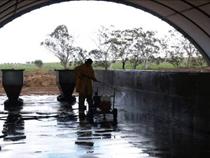
Disinfect room/water/air/feed – in this case lime washing is used as a
terminal disinfectant |

Cleaning needs to be done in a formal manner
with an agreed procedure. Cleaning must
include all the components of the environment – water, feed, floor and the
air.
The cleaning protocol as a minimum must
include:
- Remove
pigs and feed. All the pigs must be
out of the air space before cleaning starts. To reduce costs, the pigs must eat all
the feed as they leave the room.
Food cannot be washed down the slats and obviously cannot be left
for the next group (total lack of all-in/all-out) or even moved to another
group.
- Remove
all disposable equipment. On normal
farms this should include any syringes and needles.
- Dampen
the room. This significantly
improves faecal removal. Having
sprinkler systems already installed into the ceiling is extremely helpful.
- Apply
a detergent. This step is still
forgotten on most farms. But to
remove the most faecal material, grease and animal oils need to be removed
by the detergent first.
- Hot
pressure wash. Antibiotic free
farms should adopt a hot pressure washing programme after the detergent
phase. Do not use too high a
pressure and ideally use a fan jet nozzle.
- Note
all the room requires cleaning – floor, ventilation, feed and water
supplies.
- Disinfect
the room. A cheap useful disinfectant
is burnt builder’s lime – CaCO3. The additional advantage of lime-wash is
that the operator can easily see which areas have or have not been
disinfected. Disinfect the water
supply.
- Air
the room and flush the air system.
- Check
that no aspect of the room requires repair and maintenance. Note especially the water supply and any
mechanical ventilation systems.
- Allow
the room to dry. This single step
kills most pathogens.
- Restore
the room to the required ambient air temperature before the new arrivals. Ideally at least 1⁰C above the
temperature of the previous room the pig’s were occupying.
Reducing
internal spread of pathogens – note flies
and needles
The concept of all-in/all-out is when a problem
occurs during one batch; it does not spread to the next batch. However, while the farm designs and adopts a
pig flow batch, the advantages can be lost by the lack of internal biosecurity.
Reduce the internal spread of pathogens:
·
From weaning to 30 kg (10 weeks of age)
the stockpeople wear a different specific coloured set of boots for each batch
of pigs.
·
In the farrowing area, each batch
should have its own brush and scrapes, ideally colour and number coded.
·
Do not move oral medicators, needles
and syringes between batches of pigs.
·
Footbaths can assist by improving
stockpeople attitude and can disinfect clean utensils. Brush clean all boots before using the disinfectant
footbath.
Always
examine the healthy pigs before any sick pigs and move from the youngest to
oldest pigs.
On
many farms initial buildings were sited too close to each other to allow for
strict internal biosecurity. Farms must
make the best of the materials offered to them.
Partial
depopulation and
pathogen
elimination
Before, embarking on an antibiotic free regime,
the elimination of certainly pathogens would make the enterprise more likely to
succeed. The major pathogens which
should be removed from a commercial farm would include: Brachyspira
hyodysenteriae (Swine Dysentery), Sarcoptes scabiei var suis (Mange), Mycoplasma
hyopneumoniae (Enzootic or Mycoplasma pneumonia), Porcine Reproductive and Respiratory
Syndrome virus (PRRSv) and Aujeszky’s
Disease. It is assumed that the farm is free of major OIE
pathogens or active vaccine programmes are in place to control the pathogen.
|
|
|
|
|
Brachyspira
hyodysenteriae |
Sacoptes
scabiei var suis |
Mycoplasma
hyopneumoniae |
|
|
|
|
|
PRRSv |
Aujeszky’s Disease |
|
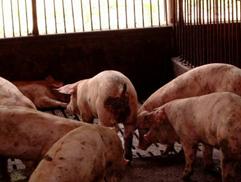
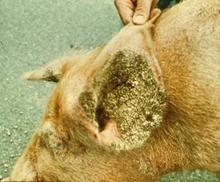
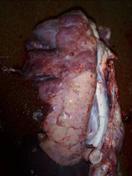
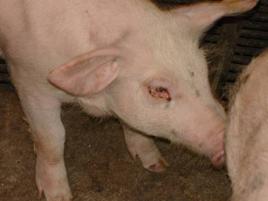
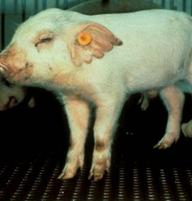
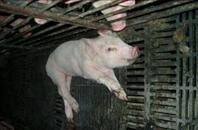
Certain pathogens may be difficult to remove,
but the acute clinical signs of the disease should be absent from the farm –
these would include Streptococcus
suis II et al., (Meningitis), Haemophilus
parasuis/Mycoplasma hyorhinis (Glässer’s), Escherichia coli F18 (Bowel Oedema) and Actinobacillus
pleuropneumoniae (APP).
|
|
|
|
|
|
Meningitis |
Glässer’s |
Bowel Oedema |
APP |


Management
of pig flow
It has been well proven that placing pigs in a
clean environment which is dry and warm (appropriate temperature) will perform
better than pigs placed in a dirty environment.
Pigs stressed by a “clean damp cold” room will die or at least not
perform.
Antibiotic free farming is about kg sold per
batch, not achieving a “1000” sow unit.
Take the “fun” out of pig farming, the farm must be routine, run as a
business, batch on batch, year on year.
Farms need to be “profit driven” not “production target driven”.
Any farm attempting to have an all-in/all-out programme
must run a batch system. Batching is
about producing a group of pigs all the same age (maximum a week variation) to
move, as a batch, through the farrowing house, nursery and then grow/finish.
It is amazing how the rigors of all-in/all-out are
not grasped by the pig industry.
All-in/all-out
is not:
- In
over time
- Almost
all out before in
- All
in, plus a few more later
- All-in,
but variable numbers per batch
- Some
this week, next week and the week after, but then all-in/all-out!
- Continuous
flow farrowing, but all-in/all-out nursery and then continuous flow
finishing (or any variant of above)!
All-in/all-out must start in the farrowing
area. The farm health team needs to
analyse the farrowing area to produce batches that will create individual air
space groups that are identical batch after batch. This might result in the need to subdivided
or combine farrowing rooms.
In general there are only a small number of
possibilities resulting in even batches that are repeatable over a calendar
year.
These options are:
Number of
farrowing rooms required to allow for all-in/all-out
|
Batch time Weaning age |
0.5w |
1w |
1.5w |
2w |
3w |
4w |
|
3 weeks |
8 |
4 |
|
2 |
|
1 |
|
4 weeks |
10 |
5 |
3 |
|
2 |
|
|
5 weeks |
|
6 |
|
3 |
|
|
Batch
times in weeks
Within the EU all piglets
must be a minimum of 21 days at weaning – thus three week
weaning is illegal. Piglets less than 28
days of age must be weaned into specialized accommodation.
On antibiotic free farms, weaning should occur
at 4 weeks or more to maximize weaner weights, especially from gilt litters,
thus reducing producer’s batching options further.
Correct
stocking densities assist health
The purpose of instigating a pig flow model is
to eliminate over and under-stocking of the farrowing house, nursery and
finishing area. It is only when a room
is empty of pigs can it be cleaned and as importantly maintained. It is impossible to fix broken drinkers and
feed lines with pigs biting the back of the stockperson’s legs and getting
under their feet.
The farm must resist the temptation to “make
up” losses by over producing later on.
This particularly involves post-summer heat issues which have resulted
in a reduced farrowing rate and slower finishing growth.
The slower summer finishing growth implies that
with a fixed number of buildings (there needs to be one air space per batch) either
there should be empty buildings in the winter months, when growth is faster or
that lighter animals are sold in the summer.
The choice is the farmer’s, the authors personal choice is that
buildings are rested more in the winter months, allowing more time for drying –
the number one disinfectant. This again
means that farms should not be managed purely on a kg/sold/sq metre production
target as this must vary over the year.
|
|
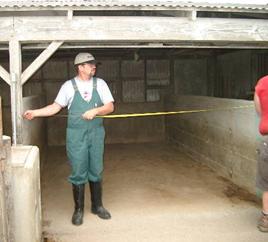
On many farms nursery and finishing buildings
are of a variety of shapes and sizes.
Farming in the European Union when finishing pigs to an average
liveweight weight of 110 kg, each pig must be provided with 0.65 m2
by law. Therefore, a 65 m2
building has room for 100 pigs to finish, not 120. This infuriates some producers, but this is
the law. If there are only 80 pigs
weaned – it will be impossible to finish 100 pigs – 20 pigs (plus post-
weaning mortality will be lost and add to the fixed cost of production). |
Farmers cannot add 20 pigs from another batch
nor can they attempt to push 120 in the next batch to make up the loss.
When
farming without antibiotics it is imperative that the pigs are not overstocked
and that stocking rates are adhered to in practice.
The second inevitable event the health team
must accept that if the farm is described in terms of sows, for example a 1000
sow unit, the production of pork/bacon must vary as farrowing rates will fall
over the summer months. This variation
in output can be 15% over the year. To
stabilize the pork/bacon output the herd size must vary – being bigger at the
beginning of summer and smaller at the beginning of winter.
Example of herd
size variation with the season
Farm selling 190 pigs a week – 5% post-weaning
mortality
|
Summer
batches |
Rest
of the herd batches |
|
70% farrowing rate |
85% farrowing rate |
|
520 sow unit |
480 sow unit |
|
|
|
|
Summer time |
Winter time |
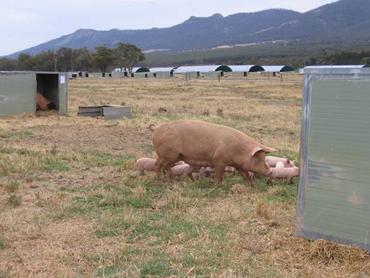

The adult farm needs to be described in terms of
a fixed unit and the batch farrowing place is an excellent unit.
Once this is adopted as the unit of measure,
the whole farm can be easily described from gilt requirements to vaccine
requirements per batch – an integral component of farming without antibiotics.
Records need to be organized around the batch
of pigs. No producer batches monthly (28
to 31 days depending of the moon?) so the monthly recording system must be
scraped. In addition, which day is day 1
of the batch? It is the day after
weaning. It is essential to ensure that
all gilts and returns which are mated on days 1 to 3 are included in the
correct batch. Otherwise weaning age is affected and batch records are
difficult to interpretate.
Management
of immunity
Innate
Immunity
|
The best immunity is using animals which have
no receptor sites for the “pathogen.
The selection of pigs and the use of DNA mapping will enhance our
knowledge of pig’s natural resistance to pathogens. Lines of pigs are already commercially
available that are “resistant” to Escherichia
coli F18 (Bowel Oedema) and F4 (K88) (Pre
and Post-weaning diarrhoea). Several breeding companies are already
recording resistance to diseases and disorders within their selection
pressures, for example not selecting future gilts and boars from sows and
gilts whose piglet’s demonstrate to pre-weaning diarrhoea. |
This piglet should not be selected for future
breeding as they have demonstrates a tendency towards having pre-weaning
diarrhoea |

Acquired
immunity
Preventative medicine programmes rely on a
healthy immune system being stimulated via effective vaccines or autogenous
pathogens using materials such as feedback programmes or direct exposure.
Immune
suppression
Any agent or factor which can reduce the pig’s
immune system should be avoided. For example
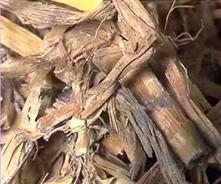
mycotoxins
can be introduced into the herd through feed, poor feed storage or
bedding. A careful review of these items
is required by the health team. It may
be better to use old rotten straw for composting rather than bedding,
especially if it results in either an abortion storm or a PRRSv break though
affecting the gilt’s immune system.
Pathogens can affect the immune system SIV is a
prime example. If the herd undergoes a
SIV break, this may affect the gilt’s immune response to the preventative
medicine vaccine programme. This may
result in the need to extend the isolation and acclimatization time or
revaccination. The batch must still be
achieved.
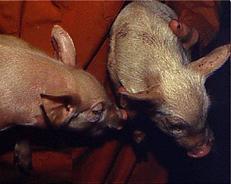
In the piglet and weaner, iron anaemia can
result in ill-health particularly post-weaning diarrhoea. Proper administration of iron at 3-5 days of
age by injection is advised. Note iron
should not be administered to piglets which have diarrhoea. Iron supplementation is not required if the
pigs are pasture reared.
|
|
|
|
|
Mycotoxins |
Swine Influenza |
Iron anaemia |

a)
Adult
herd
Healthy
adult herd
A major risk to the herd’s health is the
deliberate introduction of live animals into the herd. This risk can only be mitigated by time in
isolation allowing any pathogen which the new animals are incubating, reveal
themselves. And, if possible, become none
excreting before the animals are introduced to the main herd. The gilt or boars also require time to become
acclimatised to the farm’s native “pathogens”.
Swine Influenza viruses are an excellent example, whereas if the new
gilt is excreting the virus, isolation and acclimatisation allows the gilts to
recover and stop excreting virus before joining the main herd. Or affected gilts or boars can be recognized
and immediately culled before infecting the main herd. If the farm is large enough parity segregation
should be practiced.
Of the major pathogens, which gilts and boars
need to acquire on positive farms, the most important is Porcine Reproductive
and Respiratory Syndrome virus. On
positive farms, adopting an antibiotic free system, must ensure that gilts are
positive to the native PRRSv variant and will not introduce “new” variants into
the main herd. To allow for adequate
time for the virus to infect the gilts and excretion stop and be available for
breeding at 220 days of age and 130 kg live-weight, the gilt needs to enter the
isolation area at 60 kg or earlier.
The farm has two major options to obtain new
breeding gilts – essential for efficient pig flow batches.
- Breed
their own gilts
If this is the health team’s decision it is
still essential that the gilts are introduced and acclimatised to the adult
herd before entering the breeding unit.
Note again the gilt should leave the finishing herd at no later than 60
kg liveweight to allow adequate isolation and acclimatisation time. Selection of gilts should start at the
breeding of the mother and father and not just looking at this week’s finishing
herd.
- Purchase
breeding gilts from a genetic supplier
These are often sold at breeding weights – 105
kg or more. But this means there is
little isolation and acclimatization time allowance. This can be a disaster on farms practicing a
no antibiotic free period. Therefore, as
stated previously, future breeding gilts should be purchased from the genetic
company at 60 or even 30 kg liveweight.
This needs careful discussion with your genetic supplier.
If the farm is large enough, parity segregation
should be considered as a better option to reduce risk of pathogen introduction
and spread around the farm.
Male
genes
Teaser boars should be from on-farm stock.
Male genes should be obtained through
(artificial insemination) AI. In general
terms AI is a highly proficient and biosecurity safe method of moving male
genes.
A PRRSv negative unit should practice on-farm AI
If the farm is PRRSv negative,
on-farm AI should be practiced to reduce the chance of introduction of PRRSv
through semen. Only a few boars need to
be purchased (1 for each 100 sows), and while they should enter at 100 kg, or
more, so their genetic potential can be proven by the genetic supplier. However, their biosecurity can be ensured as
they can then remain in isolation for several months without compromising their
reproductive efficiency.
Depending on the location of the farm other
pathogens may also pose the same risk as PRRSv and the health team needs to
take these pathogens into consideration if they can be transmitted by semen or
gilts: Post-weaning Multisystemic Wasting
Syndrome, Foot and Mouth
Disease and Classical Swine
Fever could be contenders.
A herd’s natural immunity can be disturbed by
the introduction of large numbers of
gilts. This can be
prevented by monitoring closely the parity distribution of a herd to a 3.2
parity average. The pig flow model will
predict the number of gilts required allowing for careful planning of
isolation. It is not unusual for
“outbreaks” of Enzootic (Mycoplasma) pneumonia or Porcine Reproductive Disease
Complex (PRDC) to be associated with a sudden increase in the proportion of
finishers from gilt litters.
Likewise, if the herd age increases, while this
can enhance herd immunity, the sows aged past parity 7 have lower number of
piglets weaned, thus causing variable output, this cannot be tolerated.
A suggested parity profile:
|
Parity distribution |
0 |
1 |
2 |
3 to 6 |
7+ |
Average |
|
|
Percentage of adults |
17 |
15 |
14 |
48 |
8 |
3.2 |
parities |
Gilt purchasing needs to be carefully balanced
by the batch’s requirements. Discuss
this with your genetic supplier.
Vaccine
health
To reduce the necessity of antibiotics, the
health of the adult herd needs to be enhanced by the use of vaccines. Commercial vaccines to many pathogens are
available. It is not necessary for every
possible vaccine to be used to allow antibiotic free farming; however, a
greater reliance on vaccines will be required.
Some vaccines are strongly advised:
For sow health
- Erysipelothrix
rhusiopathiae to
gilts in isolation and before farrowing or at weaning.
- Parvovirus
to maiden gilts in isolation to help stablised pig flow.
- Lawsonia
intracellularis to maiden gilts in
isolation.
For offspring health through colostrum
- Escherichia coli
to gilts and sows pre-farrowing.
Ideally use oil based long life vaccines, so the vaccination can be
administered at breeding and not to the gestating sow and most certainly
not during lactation.
- Haemophilus
parasuis to gilts and sows pre-farrowing, these
vaccines appear to produce the best control of Glässer’s in weaned pigs
when administered to sows 3-6 weeks pre-farrowing.
- If
an effective vaccine to Streptococcus
suis II is locally available, this should also be administered to
the adults if possible.
For finishing pig health
- Porcine
Circovirus II vaccines should be administered in all
farms with endemic PMWS to weaners before the age of 5 weeks.
- Mycoplasma
hyopneumoniae should be administered
at weaning on all farms which are positive to the bacteria.
- Lawsonia
intracellularis administered
through the water supply or manually orally at weaning.
These comments do not take into account legal
requirements for vaccination – Aujeszky’s
disease or Classical Swine
Fever or local prevalent pathogens – Salmonella
cholerasuis for example, as advised by the health team.
However, if vaccines are not stored properly, they
will be inactivated. Being delivered to
the farm on a cold winter’s day frozen negates the whole programme. All vaccine stores along the entire chain
should be monitored. All farmer
medicine stores should have maximum/minimum thermometers and temperature
monitored at least weekly. If the
vaccines have been suspected of being frozen they cannot be relied upon and
therefore, must be disposed.
|
|
|
|
|
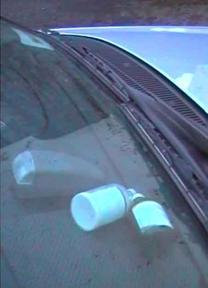
Transport to the farm – avoid temperature
extremes |
Poor refrigerator storage – vaccines must not
be frozen |
Needle length and route of administration |

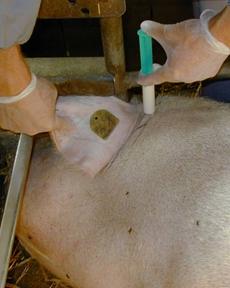
Administration
process
Irrespective of the vaccines chosen by the
health team and their excellent storage, inappropriate administration,
classically using too short a needle, depositing into fat tissue rather than
vascularised muscle tissues, may negate the whole programme.
Note the pig’s actual age when vaccines are
administered and consider any maternal interference in several vaccines. Erysipelas and Parvovirus vaccines are
examples which cannot be administered at weaning. Do not unnecessarily raise maternal colostrum
protection where possible; for example avoid PCV2 or Mycoplasma hyopneumoniae vaccines to pre-farrowing sows when piglet
vaccination is going to be carried out as maternal immunity will affect the
proficiency of the piglet vaccine process.
Even with dead vaccines, post-vaccinated
animals may feel unwell for a day or so.
Therefore, avoid periods when this can impact production – for example,
never vaccinate lactating sows. If the
sow goes off her food this will negatively impact weaning weights, post-weaning
growth and post-weaning mortality, wean to service intervals, farrowing rates
and subsequent litter size.
Covering
pathogens not available in vaccines
Feed-back programmes
Gilts and boars, both purchased from outside or
homebred need to be acustomised to the background pathogens, especially any
reproductive pathogens (including pathogens resulting in congenital defects),
before being bred. The easiest method of
achieving this is to take faeces from nursery pigs (if the farm flow layout
allows) and farrowing house materials – faeces from sows and piglets
(especially any diarrhoea), stillborn and mummified materials. Bedding from farrowing paddocks or pasture
raised pigs can be a good source of feed-back material.
The classical agents which are stabilised using
these materials are Parvovirus
and other SMEDI
viruses (Enteroviruses and Circoviridae) and
agents responsible for congenital
tremor (as yet unrecognised).
Feedback materials assist in preparing the
gilt’s immune system to produce adequate colostrum in order to protect their
future piglets. The pathogens here
include Rotovirus,
Escherichia coli
various strains (F1, F4, and F5 as examples) (note colostrum will not protect
against post-weaning F18). But also the
often forgotten protection offered by colostrum to Staphylococcus
hyicus (Greasy Pig Disease), Streptococcus
suis (meningitis); Haemophilus
parasuis, Actinobacillus
suis and Mycoplasma
hyorhinis (all resulting in polyserositis- Glässer’s disease). On farms practicing an antibiotic free regime
this material should be reintroduced to all pregnant sows 6 weeks
pre-farrowing.
b)
Piglets
The
runt pig
|
|
Piglets born less than 800g should be
euthanased at birth before they have suckled any colostrum. Colostrum is limited gold and must be used
wisely. Do not waste colostrum on piglets
which have a 90% of dying. It is still
possible to target 10.5+ weaned per litter with this policy. If piglet birthweights are low, review
pre-farrowing feeding routines and management. |
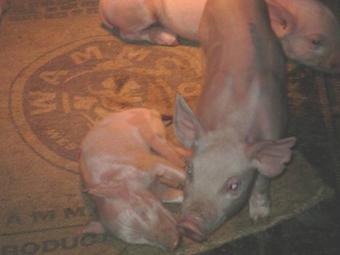
Gilt
litters
Ideally all gilt litters should also receive
some colostrum from an adjacent sow by spilt suckling. But note this has to be within 6 hours of
birth. This can increase growth rates of
the piglets by 60g a day and reduce the mortality by 50%. Sow colostrum can be obtained by milking the
sow using a human breast pump, but this is very time consuming.
Infectious
load
Reduce the infectious load in the piglet by
excellent cleaning and drying of the farrowing accommodation. Washing the sow pre-entry into the farrowing
area reduces faecal contamination of the udder and reduces the number of
parasite eggs such as Ascaris suum. In non-pasture reared sows remove the
faeces from behind the sow 3 days pre and post-farrowing.
Coccidosis
Isospora suis is
an insidious pathogen of piglets and results in chronic, often subclinical
injury to the small intestine. This
major impact of this subclinical infection can be is a reduction in weaning
weights of 0.5kg. Any reduction in
weaning weights should be avoided as it reduces post-weaning growth and
resistance. Control of Isospora should
be practiced by the administration of a toltrazuril-like
product at 4 days of age.
Iron
deficiency anaemia
Sow’s milk is deficient in iron. The piglet naturally would acquire the necessary
iron from eating soil from the farrowing nest environment. If the farm is not farrowing on pasture, it
is essential to ensure all piglets have an iron injection at 3 - 10 days of
age. Poor iron blood levels may be
revealed by an increase in post-weaning diarrhoea and, when extreme, pale
weaners. Ensure needles and equipment
used for administration of iron is of the highest quality. Change needles between litters.
Blood
borne pathogens
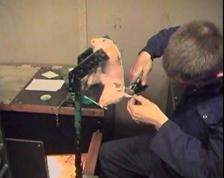
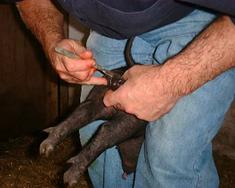
Do not unnecessarily spread blood borne
pathogens between litters, for example Mycoplasma
suis and PRRSv. Take care with
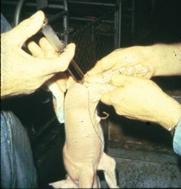
castration blades between litters. At
maximum use one needle per litter and do not go between litters. Do not move automatic syringes between rooms
and batches without sterilization. Watch
teeth clipping, tail docking and ear notching equipment.
|
|
|
|
|
Teeth clipping |
Tail docking |
Tattooing |
|
|
|
|
|
Ear notching |
Castration |
Needles and syringe |



Avoid
piglet growth limitations
All measures which may reduce or interfere with
the piglet’s growth should be avoided, this includes most piglet processing –
teeth clipping, tail docking, castration and ear notching. Fostering should be practiced in the minimum
and only to even up litters and not after day 3, unless absolutely necessary.
Avoid all vaccines to lactating sows as these
may reduce sow feed intake and practice all known methods to enhance lactation
output. Lactation output can be
influenced by a range of measures – but particularly avoid overweight pregnant
sows, temperatures in excess of 20°C in the farrowing house (provide adequate
cooling when ambient temperatures exceed 24°C), low water availability.
Birth
to Weaning
Avoid fostering wherever possible. Evening up of litters by day 3 post-farrowing
has enormous benefits. But fostering
after day 3 lowers total weaning weight.
Placing extra piglets on gilts helps to drive milk output from the gilt
and gilt lactation feed intakes.
Mimic nature’s natural piglet socialization by
mixing two litters of piglets on day 10 and then 4 litters on day 14 all within
the same batch. Pre-weaning mixing has
little influence on weaning weights, but does improve post-weaning growth and
behaviours. Never move piglets back into
a younger batch.
c)
The
weaned pig
Weaning
the pig
Weaning the pig is extremely stressful. The weaned piglet has little idea where to
eat, drink, sleep or defecate, especially in a new foreign environment. If the building has been adequately cleaned,
the natural landmarks have disappeared.
It is essential that you create these environmental signals. A big pen environment is the easiest to
assist this.
- Create
a sleeping area away from any draught (less than 0.1m/s) and water
supplies.
- Create
a defecation area which is cold, damp, possibly draughty (about 0.3m/s)
and dark/dim.
- Teach
the new weaner when and how to eat – note on day of weaning they were being
fed every hour by their mother – who told them when to eat. They are not hunger driven.
- Provide
“lavish” amounts of freely accessible water – not from a nipple which has
low flow rates and is out of reach (because it is still set for the
previous 30 kg pigs).
If your weaners “scream and wail” for long
periods of time in the post-weaning period, review weaning protocols – it is
not natural.
|
Sleeping
area |
|||
|
|
|
|
|
|
Draught free <0.1m/2 |
Warm 30⁰C (at 7 kg) |
Dry |
Light 200lux |
|
Toilet
area |
|||
|
|
|
|
|
|
Draughty – 0.3m/s |
Cold 24⁰C |
Wet |
Dark less than 40 lux |


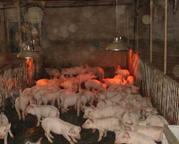
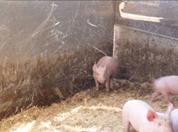
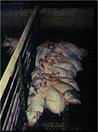


Classic
mistakes
|
|
|
|
Combined sleeping and water area |
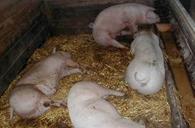
Why are pigs in these two “identical” pens in
the same room sleeping in different patterns? |
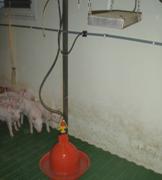


-Hot and damp!
Is this the area a sleeping or defecation area? The farm team needs to think “pig”.
Vaccines
at weaning
Administer vaccines to the pig where
applicable. Ileitis (PED, PIA, Lawsonia intracellularis)
occurs on most farms. Live vaccines are
available which can be administered at or even before weaning.
Farms with other disorders may have to consider
the practicality of administration of vaccines to cover the conditions Escherichia coli
(F18) Bowel Oedema), Aujeszky’s
Disease or Salmonella
cholerae-suis.
There are some conditions, where farming without antibiotics would not
be in the welfare interest of the pigs and the pathogens should be removed
first – these could include Brachyspira
hyodystenteriae (Swine Dysentery), Classical and
African Swine Fever.
Streaming
– not all pigs are born equal
The smaller 10% of pigs at weaning should be
removed from the main group, given special attention and time to adapt to their
circumstances. On many antibiotic free farms, these are actually removed from
the system altogether and farmed along traditional lines with the use of
conventional prophylactic treatment methods.
This also allows for any fall-out pigs from the antibiotic free
group/room/batch to be treated humanely.
d)
Grow/finish
It is essential that the pigs remain in their
own cohort. Neither pigs nor materials
from other pigs or batches should enter their environment. Ideally, on batch antibiotic free farms, a
wean to finish system should be employed as this reduces the pigs exposure to
novel pathogens.
Management
of the environment
The environment can be broadly broken down
into: Water, Food, Floor and the Air.
Within each of these four factors, set
parameters should be drawn up by the health team and ideally posted in a
prominent position – for example on the entry door. The health team should be provided with
suitable equipment to measure and adjust the environment of the pigs.
|
Environmental
factor |
Typical
examination |
Equipment
required |
|
Water |
Height of
drinkers Flow from
drinkers Quality of
water Position of
drinkers Pig’s
behaviour |
Tape
measure Cup and
timer Total
dissolved meter, taste Eyes Observation |
|
Food |
Length of
feeder Position of
feeder Quality of
feed Quantity of
feed being fed Pig’s
behaviour |
Tape
measure Eyes Taste Food
sieve Weigh scale Observation |
|
Floor |
Floor area Quality of
floor Pig’s lying
behaviour |
Tape
measure Hand/roughness Observation |
|
Air |
Temperature Humidity Air
speed/draught Gas
concentrations Pig’s
sleeping and defecation behaviours |
Thermometer Hygrometer Vanemeter,
Smoke sticks Nose, eyes,
sensors Observation |
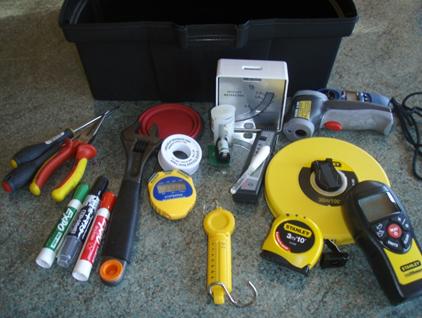
Basic environmental assessment kit
The building prior to the pig’s entering must
be suitable for the animals on entry.
The building must be capable of maintaining a suitable environment for
the entire duration of the animal’s occupancy.
Animals are not to warm and dry the building. Ensure drinker heights are set
correctly. Drinkers set for 30kg pigs
must be lowered before the next batch of newly weaned pigs before entry. Post-weaning pigs need a different feeder space
then pigs weaned 5 days. Air movements
acceptable for adults are not acceptable for piglets which will be
chilled. Adult sows will be heat
stressed if kept at 30⁰C, whereas the newborn piglet is comfortable. Animals should enter a building that is 1⁰C
warmer than the building they just left.
Management
of compromised pigs
The compromised pig
is a major health threat to the farm as well as creating enormous welfare
problems. Farm staff must realize that
euthanasia is a good welfare option and keeping crippled pigs alive is cruel.
Compromised pigs can be broadly divided into
six areas:
At birth
- The
runt – less than 800g birth weight and/or poorly muscled.
- Pigs
produce large number of offspring and not all of them are capable of
producing a finishing pig.
Commercial piglets with a birthweight less than 800g have only a
10% chance of survival to finishing.
Unless specialist care can be given, these pigs should be
euthanased, ideally at birth, before they have consumed colostrum which
might help other smaller pigs survive.
- Pigs
born with deformities that will interfere with slaughter
- Pigs
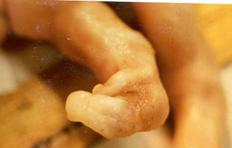
which are born with deformities of the mouth (cleft palate) or severe feet
issues – arthrogyphosis, no toes on one foot.
- Once
it can be determined that the piglet will not be likely to survive until
slaughter it should be euthanased immediately.
|
|
|
|
|
Poorly muscled pig |
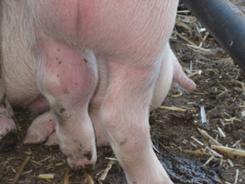
Congenital deformity – arthrogyphosis and
fused toes |
Poor doing pig |


At
weaning – pigs less than 4 kg
- Pigs
of low weaning weights for example for 18-24 day average 4 kg or less
should be given special care in the form of a nurse sow/gilt, specific
accommodation or euthanased. If
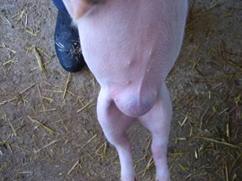
there are any deformities in these pigs, such as hernias or joint ill for
example, they should be euthanased.
|
|
|
|
|
Small pig at weaning |
Hernia – large scrotal and/or umbilical |
Joint ill |

During
grow/finish
The veterinarian should produce a formal advice
booklet regarding the care of compromised pigs.
The farm should be encouraged to adopt a “7 and 14 day rule”
concept. Here when compromised pigs are
discovered they are: inspected, individually identified and if necessary
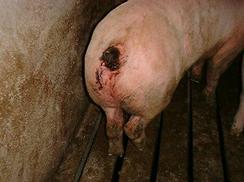
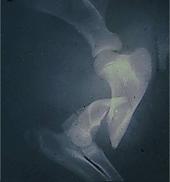
hospitalized or immediately euthanased (broken legs, severe tail biting, rectal
strictures for example). The pigs are
then examined at least twice a day and reassessed. On day 7, assuming euthanasia has not
happened, a thorough examination should be carried out, ideally by the farm
manager and a formal decision made to continue for an additional 7 days or to
euthanse the pig.
At 14 days, another careful examination is
made. If the pig has not recovered it
should be euthanased.
During the routine veterinary visit, a careful
clinical examination of the hospital area is essential.
|
|
|
|
|
Severe tail biting |
Broken limbs |
Rectal stricture |

The hospital area posses unique challenges to all-in/all-out programmes. Animals moved to the hospital area cannot be
moved back into the main group.
Comment
Production figures should be about realities
rather than just numbers. Killing pigs
on the first of the month, to reduce last month’s figures is not acceptable.
Management
of people
The success of an antibiotic free programme are
the stockpeople. Training, encouragement
and provision of confidence in the system is essential. Stockpeople need to
realise that they cannot cheat the system.
Antibiotics are easily revealed in the slaughterhouse and food
processing laboratories. Destruction of
the system is easy, just foster piglets, avoid all-in/all-out programmes, over-
and under-breed, lie and mislead advisors and management staff. But in the end the pig will reveal all.
Change the goals of the farm away from being
production target driven towards a profit driven farm. Areas to note would include:
Weight/numbers weaned per batch rather than
pre-weaning mortality.
Number of empty farrowing places rather than
farrowing rate.
Number of empty shackle places rather than pigs
per sow per year.
|
|
|
|
|
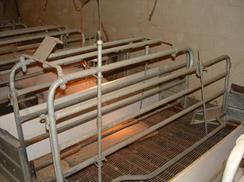
Empty farrowing crates |
Weight of pigs weaned Picture shows
weigh scale |
Empty shackles |
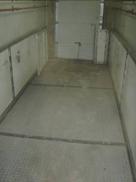
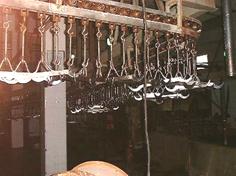
Which
is the better farm? Consider which
scenario describes your client’s farms.
Typical
family farm 10 sows a week batch farm
|
Farm
A |
Farm
B |
|
Preweaning mortality 8%, numbers weaned 9.5
per farrowing place |
10 weaned per farrowing place and a 12%
pre-weaning mortality |
|
A 90% farrowing rate and 9 sows farrowed this
batch |
10 sows farrowed this batch with a farrowing
rate of 76% |
|
5% post-weaning mortality from weaning to 110
kg liveweight |
7410 kg of deadweight paid for this batch |
|
2.3 litters per sow per year |
385320 kg of pig meat sold per year |
|
23 pigs per sow per year |
7410 kg deadweight produced for the last 52
batches |
|
I get $1.00 unit per kg income |
My real cost of production is $0.95 units per
kg |
|
I vaccinate against every possible pathogen |
I make a profit |
Production
targets only matter once the farm is profitable
Moving
from a traditional farm towards an antibiotic free farm
The following programme has worked on a number
of units. The programme takes around 2
years to complete.
|
Current farm |
Antibiotics to 70 kg liveweight in the
finishing herd |
|
1st phase |
Remove antibiotics from adult herd |
|
|
Remove antibiotics from growing pigs older
than 30 kg |
|
2nd phase |
Remove antibiotics from weaned pigs older
than 18 kg |
|
3rd phase |
Remove prophylactic antibiotics from all
healthy pigs Use only injectable or oral medication for
the compromised pigs |
|
4th phase |
Separate all medicated compromised pigs from
main farm unit |
·
Management of
the environment
·
Management of
any compromised pigs