Parturition
(Farrowing) in the pig
assuming farrowing
at 115 days
|
Time |
Event |
|
|
110 days |
Foetal production of corticosteroids |
|
|
111 |
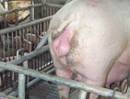
Progressive swelling of vulva |
|
|
Vulva becomes redder |
||
|
Mammary glands develop |
||
|
113 |
Individual mammary glands easily visible |
|
|
114 |
Sow becomes restless |
|
|
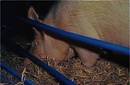
Nest making starts |
||
|
Sow stops eating |
||
|
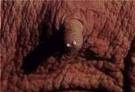
Milk can be expressed from nipple |
|
|
|
115 |
Sow lies down with periods of restlessness with clawing and chomping of bedding materials |
|
|
|
60-75% of sows farrow at night |
|
|
-1 hour |
Sow settles down in lateral recumbancy |
|
|
Intermittent straining and paddling of legs |
||
|
-10 minutes |
Passage of small quantity of foetal fluid |
|
|
Marked twitching of tail |
||
|
Pain and abdominal effort/straining Leg movement in time with contractions |
|
|
|
0 |
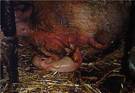
Passage of first piglet |
|
|
0-3 hours |
Sow more relaxed |
|
|
Passage of piglets every 10-20 minutes |
||
|
Gilts may be restless after 2-3 piglets |
||
|
Piglets born within 3 hours of all piglets |
|
|
|
After last piglet |
Sow stands and urinates |
|
|
Sow lies down quietly suckles |
||
|
4 hours later 8 hours max |
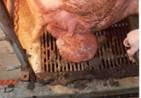
Placental mass passed |
|
|
The sow does little to assist her piglets |
||
|
There is no sure way of knowing a sow has passed all her piglets and placenta. Watch sow behaviour for the next 24 hours |
Induction of farrowing
Injection of PGF2a on day 112-113 results in parturition 28 hours later.
50 to 60% of pigs will farrow on the following day after an injection at 7.00am the previous day, but note 20-25% will not.
Hormonal Assistance in farrowing
Oxytocin 5-10 IU intramuscular. More than 10 IU results in uterine spasm.
Submucosal intralabial injection only requires 2.5 IU oxytocin.