|
Pollutants
| Gas |
Chemical Formula |
COSHH long-term limit ppm (8hrs) |
COSHH short-term limit ppm (10mins) |
Effects of high exposure |
|
Ammonia |
NH3 |
25 |
35 |
- 200ppm:
sneezing, salivation, and appetite loss
-
30ppm: some respiratory signs, reduces mucociliary escalator
|
|
Carbon Monoxide |
CO |
50 |
300 |
Abortion
in pregnant sows |
|
Carbon Dioxide |
CO2 |
5000 |
15000 |
100,000
narcotic used in slaughterhouses |
|
Hydrogen Sulfide |
H2S |
10 |
15 |
- 20ppm:
low appetite, fear of light, and nervousness
-
Sudden exposure to 400ppm is lethal
-
Low concentration- smell of rotten eggs
-
High concentration- no smell |
Ammonia
*Expensive detectors are NOT needed for ammonia
| [NH3] |
Typical Human
Effects |
| Below 5ppm |
No effect |
| 5-10ppm |
Detect its smell |
| 10-15ppm |
Causes mild
irritation |
| Above 15ppm |
Causes eye
irritation and tear flow |
Dust
- Air must contain less than 10mg/m3 of inhaled dust
- Respirable dust particles are 1.6 to 3um in size
- Particles > 3μm in size are removed by
upper respiratory tract (URT)
- Particles < 1.6μm in size blow in and out of the entire
respiratory tract
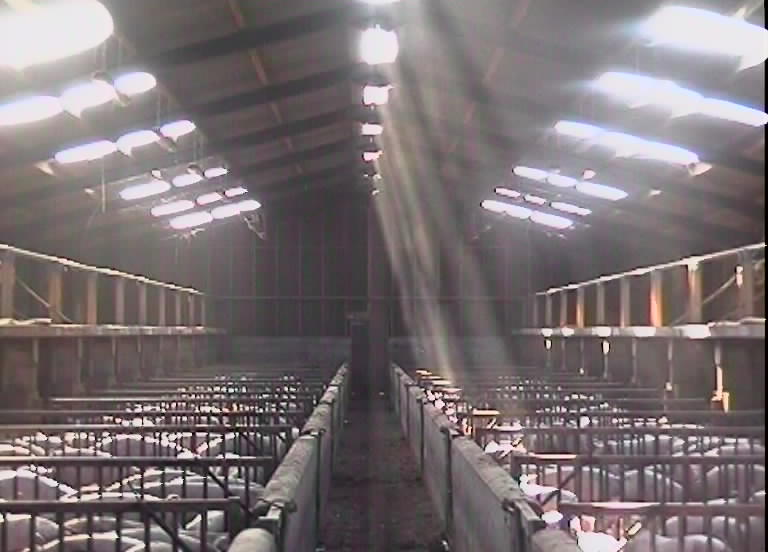
The dust visible in the sunlight shaft (pictured
above) is respirable dust which is a major threat to your pig's
respiratory tract.
|
|
|
|
|