Sustainable
pig farming – making a start
If you are not used to raising pigs from scratch – breeding, farrowing, looking after piglets- it is best to start just learning about the animal – its habits, feed, water and cooling requirements. Start with weaners and aim to produce good compost and excellent finished pigs. Along the way, some farmers will start wanting to produce their own pigs but that is the topic for a different day.
Basic pig building
Once we have decided not to have big sows and boars, we can radically simplify the building design.
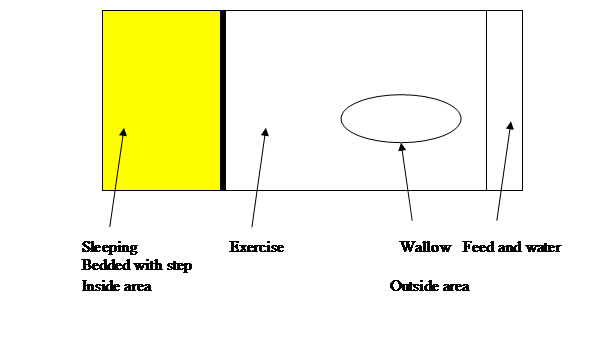
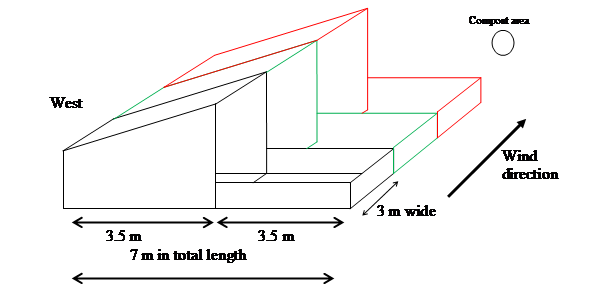
The building will be 3m wide and 7m long- thus providing 21 m2 – enough room for 10 pigs.
Floor plan view:
Side plan view
Gate
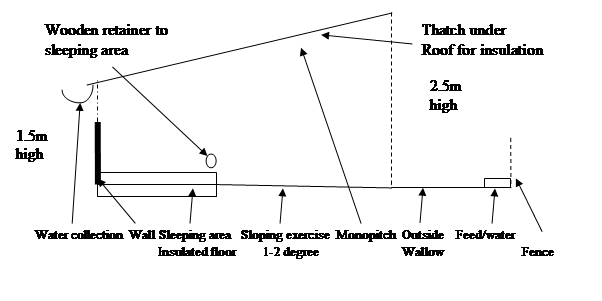
The building design can be modulated – making expansion easy.
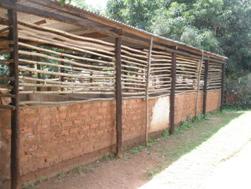
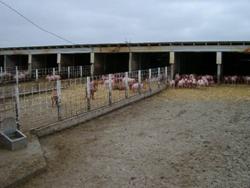
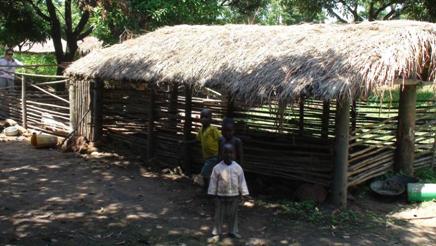
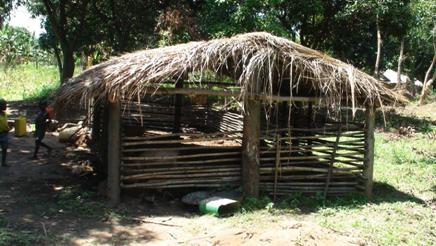
Example of this style of building:
|
|
|
Orientation
In Uganda the big issue is hot pigs. Orientate the building so that the sleeping area is at the west end of the building – thus providing shade from the afternoon sun. The other consideration is the wind direction to provide maximum ventilation.
Water collection
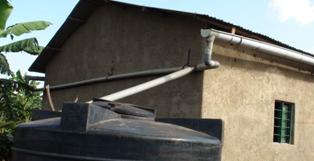
Collecting water from the roof can significantly reduce the amount of water which needs to be brought to the pigs.
|
|
Ideally keep the water high so that it can flow to the individual pens and have an over flow tank anyway for long term storage. The tanks should be sealed to reduce algae growth. Ensure the gutter and pipes are well maintained |
Biosecurity
Ensure
that there is a 2 metre clear walkway around the building to reduce rodent and
other vermin/pests from entering the unit.
Timber protection
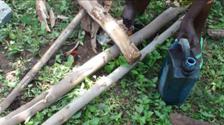
All timber which is placed in the ground should be protected from being eaten and rooting, particularly from termites.
|
|
|
|
Peel back the bark |
Carefully cover the end in burnt engine oil. Use a rag to rub the oil into the wood |
|
|
|
|
Cover the protected timber with a plastic sheet |
Place in the ground |
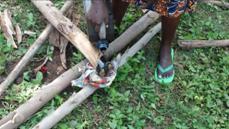
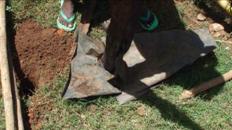
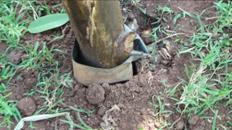
This will greatly increase the life of the post. Without this protection the termites will eat the post in around 6 months.
Pigs and wood posts
|
|
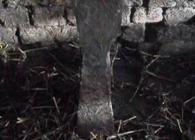
Pigs will also eat any wood posts. Be particularly careful of any post which is supporting the roof. Protect such posts with metal sheets (although this can become sharp) and/or concrete. |
Observation area and Sow
modification
|
|
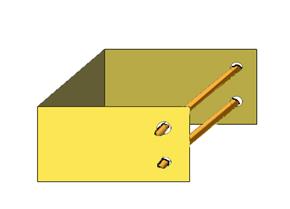
The building could be used for sow and farrowing accommodation The sleeping area is slightly modified so that wooden beams can be placed across the sleeping area restraining the pigs either for treatment or as a farrowing area |
Example of a similar
building – although thatch roof is used in this example
|
|
|
Side view of the entire house. Note the 2 metre biosecurity clear zone around the building |
|
|
|
The rear of the house |
|
|
|
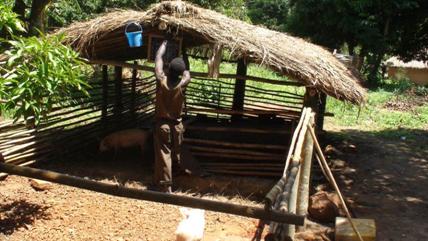
From inside the outside area |
How does this fit into a
three year plan for the community?
Year 1
Month 1
Build building for 10 finishing pigs – learn the ropes of pig production
Income from composting.
Months 2 to 6
Build four more 10 finishing pig buildings – this provides 5 buildings – each with one month supply of pigs. Thus income now coming in every month from pigs.
10x 150,000 shillings per month – net 15,000,000 shillings a year.
Year 2
Build 4 more community finishing units
Income now 10x 150,000 shillings per week – net 65,000,000 shillings a year
Year 3
Build a 5 sows a week breeding unit- supplying 50 pigs a week to one of the community finishing units. Control the cost of producing the piglets – net 78,000,000 shillings a year
What if I decide I don’t like pigs?
The buildings are designed to be able to accommodate other animals – chickens, turkeys or goats for example. They could be modified for older pigs also.