Identification of Pigs
|
Ear notching |
||||
|
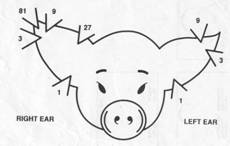
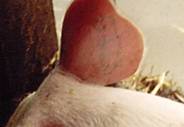
The pig’s ears are notched in the farrowing house The right ear signifies the mother’s number the left ear the piglet’s number within the litter One of the small notches removed could be kept for future DNA analysis |
||||
|
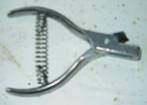
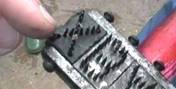
Notching equipment |
|
|
||
|
Ear tattoo |
||||
|
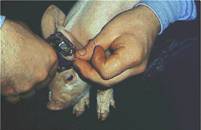
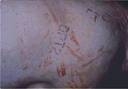
Again applied in the farrowing house. Tattoos can be very difficult to read in older life |
|
|||
|
Slap maker – prior to slaughter |
||||
|
This is to be read after the animals are dead and de-haired
|
|
|||
|
Ear tag |
||||
|
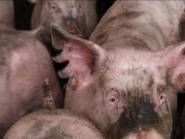
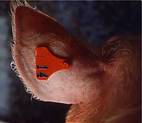
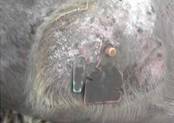
These can be applied at any age. Two tags are more likely to allow identification to be retained. The tags may be electronic to allow computer identification. The ear tag can be notched to help identification outdoors. Pigs over 60 kg which are treated with injectable antibiotics should be individually tagged |
|
|||
|
Spray marking |
|
|||
|
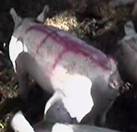
Useful for temporary identification of medicated or selected pigs. However, note that many sprays do not last for the entire length of medicine withdrawal times. Pigs in some parts of the world are spray marked before loading when intended for slaughter. Computerized sorting can mark pigs |
|
|||
|
Hair Clipping |
|
|||
|
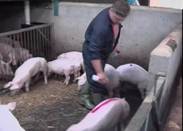
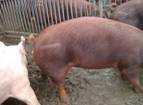
Can be useful as a temporary marking method. Using a pair of curved scissors trim a line of hair. The hair will regrow in 6 weeks |
|
|||