Farrowing management – Combining litters before weaning
|
Objective |
||||||||
|
|
To enhance post-weaning growth and socialisation |
|||||||
|
To reduce post-weaning disorders by reducing
stress of weaning |
||||||||
|
To provide a more natural weaning environment |
||||||||
|
To reduce finishing variability and feed costs |
||||||||
|
Background |
||||||||
|
|
Piglets will start exploring outside the farrowing
nest and start comingling with other litters, especially adjacent farrowing
nests, about day 10 |
|||||||
|
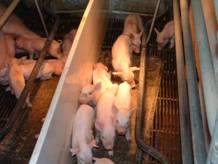
Gangs on piglets from various litters (sounders)
combine into large groups by day 14 |
||||||||
|
Note: This
is normal on outdoor units |
||||||||
|
|
|
|
||||||
|
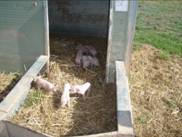
Fenders in place entry to day 10 Piglets explore arc and then the fender area |
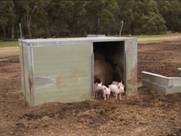
Fenders removed day 10 piglets start exploring
with mum |
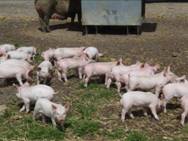
Gangs of piglets with and without mum running
around day 14 to weaning |
||||||
|
Benefits
of combining litters |
||||||||
|
|
There appears to be little change in total litter
weaning weight |
|||||||
|
However, smaller piglets will have more “teats” to
steal milk from |
||||||||
|
|
Combined litters have a greater mass to surface
area meaning they can conserve heat better than smaller litters |
|
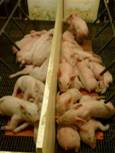
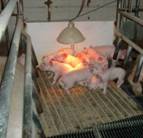
More forgiving in cases of stockmanship errors such as poor heat mat placement as shown |
|||||
|
Use of heat mats is more efficient, especially
useful as removing the central barrier increases the surface area available for
the litters |
||||||||
|
Creep feeding, which should start post day 14
only, is easier: |
||||||||
|
|
Less trays to fill – one tray does 4 litters |
|||||||
|
Less waste |
||||||||
|
Enhanced hygiene |
||||||||
|
Removal of boards between litters means they can
be cleaned and moved outside to allow exposure to sun light and UV – thus
enhanced cleaning routines. Less time
cleaning pre-entry. Boards can be
soaked and cleaned at more convenient times |
||||||||
|
Reduced need for cross-fostering |
||||||||
|
Allows more room for the piglets, especially for
larger litters – weaning more than 10+ or for liquid feeding systems with
heavier piglets 9+ kg |
||||||||
|
Allows additional room if weaning age is extended
i.e. moving from 18 days to 24 days |
||||||||
|
Post-weaning |
||||||||
|
|
The post-weaning feed intake increased |
|||||||
|
The post-weaning growth rate increased |
||||||||
|
Days to finish reduced – better flow management of
buildings |
||||||||
|
Reduced number of piglets demonstrating
post-weaning ill thrift or starvation |
||||||||
|
Socialisation of piglets post-weaning enhanced |
||||||||
|
The impact of the cross infection of nasal “pathogens” post-weaning
is reduced as piglets have greater exposure to these various strains while
under maternal colostrums |
||||||||
|
Technique |
||||||||
|
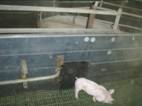
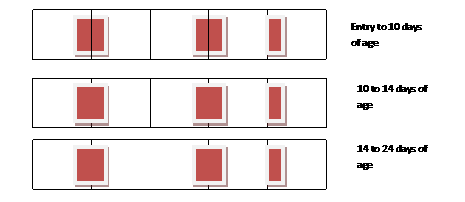
Pop hole between litters |
Per 5 farrowing crates |
|||||||
|
|
||||||||
|
Gilts may be left with a single litter to
encourage lactation feed intake – vital to reduce post-weaning wean to
service intervals |
||||||||
|
3 week batch situation
post-weaning |
||||||||
|
|
This offers a unique opportunity. By combining litters on day 14 means that
when the sows are weaned on day 24 the larger group of piglets can be left
behind in the farrowing room for an extra week. But gruel and creep feeding is much
easier. Thus reducing post-weaning ill
thrift. Reduced time spent feeding
multiple smaller groups |
|||||||
|
|
||||||||
|
For use in the period between sows leaving and 50+
weaners leaving a week later. |
||||||||
|
Disadvantages |
||||||||
|
|
Avoid combining before day 10 – increases
pre-weaning mortality |
|||||||
|
Sows or gilts may start to abandon litters – lazy
sows – consider culling |
||||||||
|
Other better mums do all the work (obviously keep
– selected for future) |
||||||||
|
Watch sow and gilt feed intake |
||||||||
|
Watch for fall back piglets – although generally
less |
||||||||
|
Cannot be used in all rooms – rooms where dividers
cannot be removed |
||||||||
|
Draughts may move down house more
efficiently. But these should be
removed anyway – all air movement above 0.2m/s should be avoided in the
piglet sleeping area |
||||||||