Herniation
There are four common forms of herniation
normally seen in the pig
1.
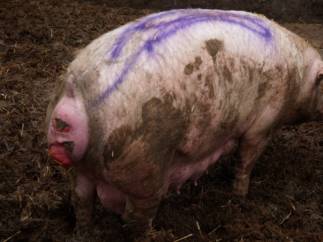
Umbilical hernia
A congenital defect with a possible genetic basis. Umbilical herniation occurs as a major problem. Normally clearly recognised when the pig is over 30 kg. The hernia can reach a gigantic size. The animal only has an economic future if the diameter stays below 30 cm and none of the skin is ulcerated. Once the hernia makes contact with the ground, euthanasia in advised. Umbilical hernia requires a casualty certificate. There is no economically viable treatment.
|
|
|
|
|
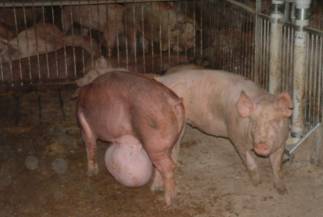
The umbilical hernia in the left top is too
large to sell and is ulcerated. The
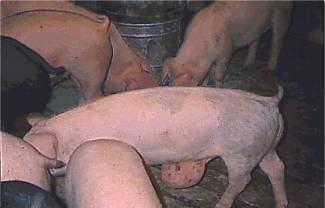
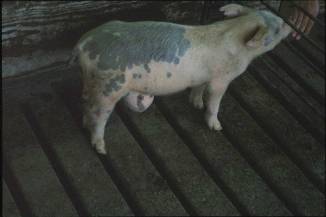
hernia above is too large and euthanasia is to be advised. The hernia on the lower left is currently
a small umbilical hernia. |
2. Trauma hernia
Typically occur due to sow biting the piglet resulting in a hernia
through the abdominal wall. The hernia
is only of consequence if intestinal strangulation occurs. If the conformation is so badly disfigured
that it may result in problems in the slaughterhouse, immediate euthanasia is
advised.
3. Inguinal
hernia
|
|
|
|
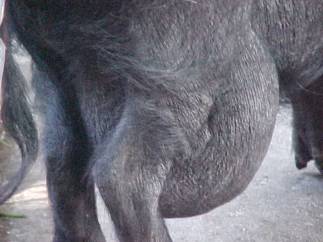
These normally occur in the male, which has a
very large inguinal canal. They can be
very large. Rarely strangulation of a
portion of the intestines can occur through the hernia. Assuming the animal is not castrated,
these animals will grow without problems to a slaughter weight. If castration has to be performed ensure
that the pig does not have a scrotal hernia and then carry out a closed
castration. It is possible to
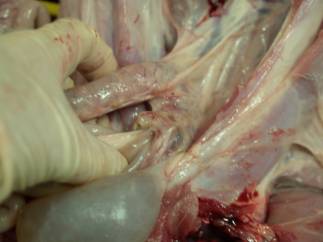
“repair” the umbilical hernia is piglets less than 3 weeks of age by tape. The right picture is from a post-mortem of
the pig with an entrapped small intestine – arrowed. Scrotal hernias appear more common in
Vietnamese Pot Belly pigs |
|

4. Perineal hernia
|
In sows the whole of the perineal region can
present in collapse. The rectum and
vagina may prolapse into the hernia.
The hernia can be very large. There
is no economic treatment. If the sow
is close to farrowing keeping until farrowing may be an option, however,
manual removal of piglets are likely to be required. Provide the sow with a bran diet or add
liquid paraffin from time to time to help with the passage of faeces until
slaughter |
|