Leg conditions in young and
growing pigs
In the pig it is difficult to examine their feet. If you suspect a foot problem do it first while the pig is lying down.
Mycoplasma arthritis
Mycoplasma arthritis caused by Mycoplasma hyosynoviae affects growers to young adults. Animals present with a sudden lameness of the legs, in particular one of the hind legs. There may be swollen joints but quite often there are few outward signs on the leg apart from lameness. Typically, the condition is seen 10-14 days post arrival onto the farm in the new group of gilts.
|
|
|
|
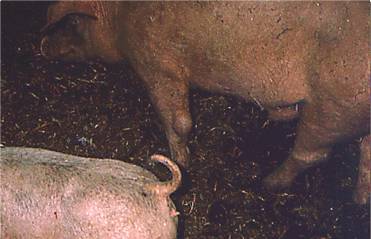
Gilt lame in hind knee |
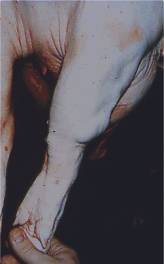
Inflamed synovia in elbow joint |
Pathology - In acute cases, the affected joints
presented with a non purulent synovitis.
Treatment - Treatment is to use mycoplasma active
antibiotics, for example Tiamutin or Lincomycin.
Control - Control can be difficult when the
condition affects incoming gilts. Ensure
there is a sufficient introduction period for the gilts to recover fully from
their lameness before breeding. A number
of growing/finishing pigs are diagnosed as mycoplasma arthritis but are
actually sprains from chasing and bullying and therefore heal spontaneously.
Review pen layout, size of steps and floor condition.
Diagnosis - Antibody examination of synovial
fluid. Note serum is normally positive
in most pigs both clinically affected and unaffected.
Joint ill
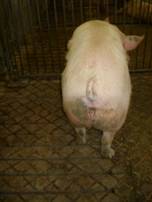
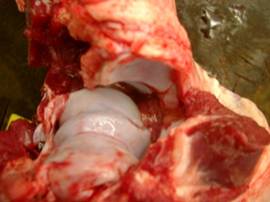
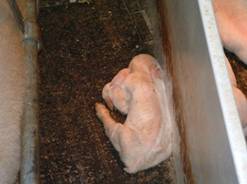
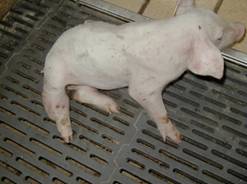
The organism generally associated with joint ill is Streptococcus suis I in particular. Many other species of streptococci can be involved. Note also Arcanobacterium pyogenes. Pigs present with an acute swelling of one or more of the joints and may be acutely lame. With time the joint swelling resolves and the purulent joint found at post mortem.
|
|
|
Post
mortem - A purulent tenosynovitis which can be
very severe. Multiple joints may be
affected.
Treatment - Use joint active antibiotics to which the streptococci are
is sensitive – for example Lincomycin.
Control - Review floor consistency. Rough floors are a major cause of
stress. In the farrowing house consider
lime washing to reduce the roughness of the floors. Check teeth clipping and tail docking
equipment. On many farms these pieces of
equipment are dirty and infect the piglet during processing.
Splayleg
|
|
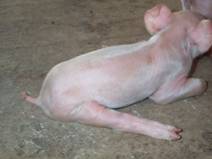
A condition of muscle immaturity aggravated by trauma immediately after birth. The piglet generally presents with the splits in the backlegs and is unable to rise. Severe cases can also include the forelegs. The difficulty rising results in poor colostrum intake and increased likelihood of being overlaid. |
|
Massage the hips and help the piglet walk. Taping the legs together with 0.5” wide elastoplast and then running the tape over the back helps on several farms. If several cases are occurring check flooring. Consider using shedded paper as farrowing bedding. Review possible mycotoxins in the sow feed. Provide artificial colostrum. If the pig can be assisted over the first three days there are few long term consequences. |
|
Trauma
|
|
|
|
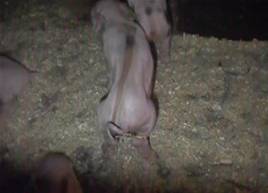
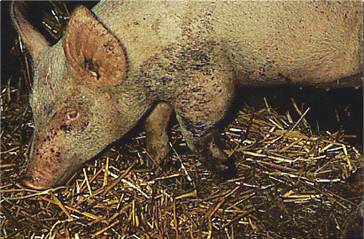
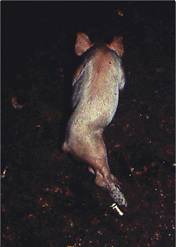
Unfortunately injuries do occur in pigs and if they are severe euthanasia may be the only option. The weaner on the left had a broken elbow. The piglet on the right had a broken back caused by the sow standing on her. In both of these cases there was no effective therapy. |
|
Skin abrasion in the piglet and
weaner
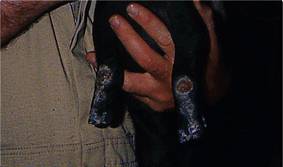
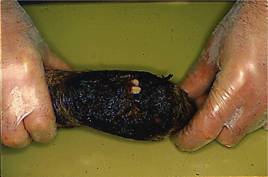
Abrasions to the carpus are very common in the piglet and weaner, and almost can be classified as normal in most pig farms. They arise from the suckling motion/activity of the carpus on the floor of the farrowing crate. The lesion develops into a callus and presents few obvious health problems, however, may result in joint ill. Proper care and attention to farrowing floors is to be encouraged to reduce the severity of the problems as much as possible.
|
|
|
|
Carpal injuries from rough farrowing house floors |
Very severe carpal erosion which has resulted in exposure of the joint. |
Ulceration and
erosion injuries
|
|
|
|
Erosions are unfortunately not uncommon on pig farms. They are generally associated with rough flooring or sharp contact surfaces. They are very common with new floors. In general removing the animal to a compromised pig pen, ideally with bedding such as straw and covering the exposed tissues with wound sprays. Secondary infections are not uncommon if the animal remains in an dirty abrasive environment. |
|
Bursitis
|
|
|
|
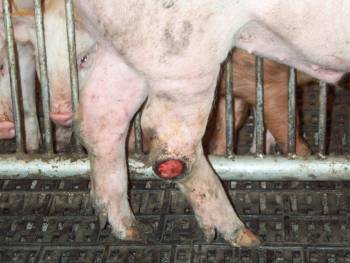
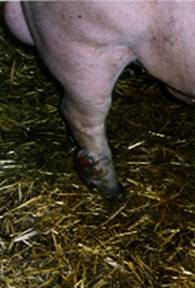
Bursitis are liquid filled protective swellings over joint surfaces. The body responds to the chronic injury by covering the area with thickened skin with underlying liquids, generally from a tenosynovial surfaces. They can lead to unsightly swellings and may lead to rejection of selected breeding animals. |
|