Foot and Mouth Disease and other Vesicular Diseases
Other
names
|
Foot
and Mouth Disease - FMD Swine
Vesicular Disease - SVD Vesicular
stomatitis-VS Vesicular Exanthema of
Swine and San Miguel Sea Lion Viruses |
||||
Causal
agent
|
Foot
and Mouth Disease - Virus Picornovirus (Aphthovirus) Swine
Vesicular Disease - Virus Picornovirus (Enterovirus) Vesicular
stomatitis - Virus - Rhabdovirus (Vesiculovirus) |
||||
|
Age group |
All ages of pigs can be affected |
||||
|
Clinical signs |
|||||
|
Foot and Mouth is
the definitive disease, the other diseases present with similar signs which
may be confused with foot and mouth |
|||||
|
|
Incubation
period 1 to 5 days but can be 21 days |
||||
|
Fever
to 40.5•C |
|||||
|
Skin
around the snout, lips, tongue, inside the mouth, around the coronary band
and the soft skin on the feet becomes whiter (blanched). Vesicles may develop on the sow's teats |
|||||
|
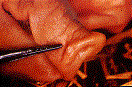
Vesicles
(blisters) develop |
|||||
|
Vesicles
rupture up to 24 hours after development and if no secondary infection occurs
healing is rapid |
|||||
|
The
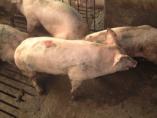
animals are lame. Lesions in the
mouth may not occur obviously in the pig |
|||||
|
With
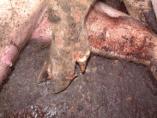
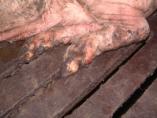
the feet, the hoof may become detached, revealing the painful raw tissues
underneath. The hoof can re-grow, but
is often deformed. This can take
several weeks |
|||||
|
The
disease affects nearly all susceptible animals, but few animals will die
specifically with the disease |
|||||
|
|
|
|
|
||
|
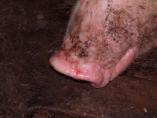
One day un-ruptured vesicle on the snout |
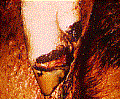
Ruptured
vesicle on the snout |
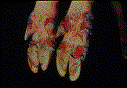
Horn
separation |
Ruptured
vesicles and some hoof separation |
||
|
|
|
|
|
||
|
Blanched un-ruptured vesicle |
Vesicles on feet |
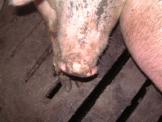
Pig lame with FMD |
|||
|
Infectivity
of Foot and Mouth |
|||
|
|
Affects all
cloven-hoofed animals - pigs, cattle, sheep and goats. VS also affects horses |
||
|
Rapidly spread
through the air, animal contact and vectors, such as clothing, utensils,
vehicles |
|||
|
Can be spread
through meat and meat-by products, especially fast frozen feeds |
|||
|
Spread through
semen |
|||
|
High humidity,
cloud cover and moderate temperatures favour airborne spread (over 20 km) |
|||
|
Pigs produce
aerosols 3000 times more concentrated than cattle |
|||
|
Carrier status
occurs in cattle. FMDv can be
excreted in the milk for up to 7 weeks |
|||
|
Post-mortem
lesions |
|||
|
|
Vesicles,
generally ruptured, in the mouth, nose and on the feet |
||
|
Treatment and control |
|||
|
Treatment |
Notify your vet
and government official if clinical signs are suspected |
||
|
None. In endemic areas a vaccine is used |
|||
|
Control |
Strict regulation
of importation of animals and animal products infected with vesicular
diseases |
||
|
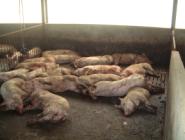
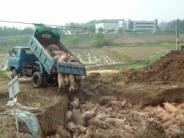
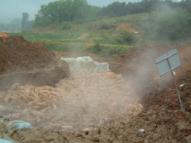
Euthanasia and disposal
of animals- burial, composting, rendering or burning |
|||
|
|
|
|
|
|
Zoonotic implications |
|||
|
|
Human infection
does occur but is extremely rare, often without any clinical signs |
||